
Myers Jackman Luxury Spa
Start-up Website Design

tools
Figma, Wix Studio, User Interviews, Competitive Analysis
Solo Project
The Team
4 weeks
Timeline
This project highlights my ability to design a website for a small business salon, demonstrating my commitment to creating practical solutions that meet client needs. As the sole UX designer, I owned the whole design process—from research and strategy through visual design and site implementation in Wix Studio.
The goal was not just to create an attractive website, but to deliver a practical, user-centered solution that supported both customers and the business owner’s long-term growth needs, ensuring the project's success and relevance.
The Client
Navigating Digital Terrain: Crafting a Tailored Website for Myers Jackman Spa
The challenge was to create a distinct and captivating user experience for Myers Jackman Spa that inspires confidence and highlights its unique identity amid a competitive landscape in the beauty and wellness industry. With numerous existing establishments vying for attention, the primary objective was to set the salon apart and attract potential clients effectively.
Key Challenges:
1. User-Friendly Navigation: The site needed to allow clients to access services and schedule appointments without unnecessary steps quickly.
2. Brand Attraction and Retention: With the abundance of options available to potential clients, the challenge lies not only in attracting clients to the spa but also in captivating their interest to foster loyalty and ensure repeat business. Crafting an experience that resonates with the target audience and builds trust was paramount.
3. Technical Proficiency and Scalability: While developing the website, considerations were made to select platforms like [Wix or Squarespace] that align with the client's technical proficiency. Additionally, the solution needs to accommodate the business's potential growth and evolution, ensuring scalability and adaptability for future expansion.
The Problem
Crafting a Unique User Experience in a Saturated Market
-
A responsive, mobile-friendly website
-
A clear and intuitive booking experience
-
Organized service listings with easy scanning
-
A polished visual design aligned with the salon’s brand
-
An editable platform that empowered the owner to manage updates independently
Final Design
The final solution delivered:
-
Improved clarity and ease of booking, especially on mobile
-
Positive feedback from the salon owner on usability and independence
-
Increased confidence in the salon’s online presence
-
A more substantial alignment between brand identity and customer experience
Results & Impact
While formal analytics were not available at launch, outcomes included:
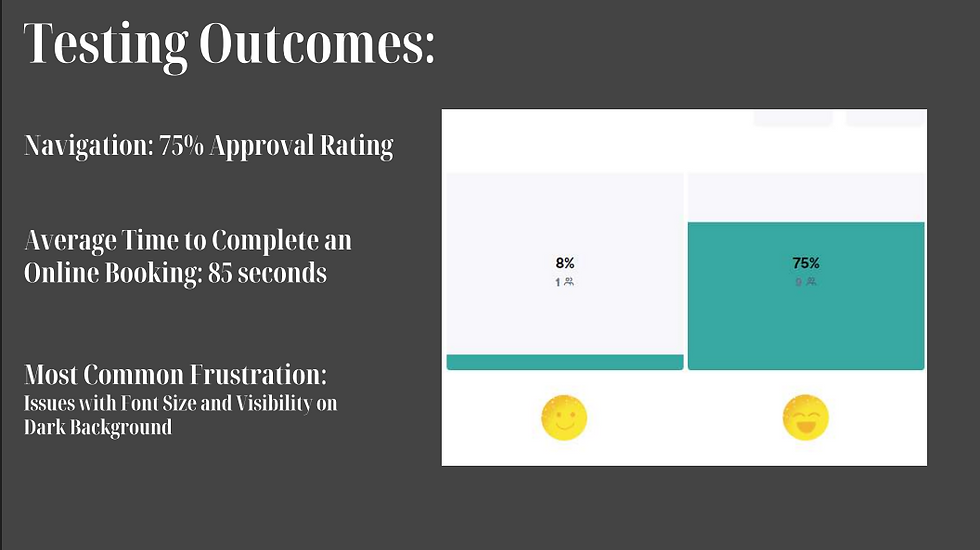
In response to the challenges faced by Myers Jackman Spa, a meticulous approach was taken to develop tailored solutions to enhance the salon's online presence and client engagement. Through strategic research, platform selection, and development, a comprehensive framework was established, which should give the audience confidence in the thoroughness and effectiveness of the project to elevate the spa's digital footprint and deliver an unparalleled user experience.
Project Goals
Crafting a Tailored Online Experience for both Owner and Clients
-
Clearly communicate services & prices.
-
Create a simple booking experience for both web and mobile.
Client - Centered Experiences
-
Ensure business owner confidence to manage content independently.
-
Create a clean, professional visual identity.
Owner Empowerment
-
Design within the constraints of a small business budget and timeline.
-
Assessed hosting platforms to balance ease of use with long-term scalability for business growth.
Scalability Within Constraints
-
Stakeholder interviews and user research
-
Competitive analysis of local salons
-
Information architecture and user flows
-
Wireframing and prototyping
-
Visual and interaction design
-
Building and launching the site
-
Client walkthrough and post-launch support
My Role
As the solo UX designer, I was responsible for:
-
A stakeholder interview with the salon owner to understand goals, pain points, and daily workflows
-
Informal user interviews to learn how clients typically search for and book salon services
-
Competitive analysis of local nail salon websites
Research & Discovery
To understand both business and user needs, I conducted:
Key Insights
Confusing service menus caused hesitation and drop-offs in client bookings.
Clarity
Most users accessed the site on mobile and sought an expedited booking process.
Accessibility
Clients tied their trust and ideas of professionalism to the site's visual clarity.
Visibility
The owner needed a platform that allowed easy updates without extensive technical knowledge.
Simplicity
These insights directly informed the structure, layout, and platform choice.
Design Strategy
Based on research findings, I focused on:
-
Create a simplified navigation and information hierarchy.
-
Prioritizing booking and service discovery
-
Reducing cognitive load through clean layouts
-
Designing reusable components for scalability
-
Ensuring accessibility through readable typography and sufficient contrast
-
Browsing services
-
Booking and appointment
-
Contacting the spa
Navigation was designed to quickly surface the most important actions, especially for mobile users.
Information Architecture & User Flows
I created streamlined user flows for the site’s core actions:

Wireframes & Iteration
Low-fidelity wireframes were used to establish layout, hierarchy, and flow before moving into visual design. I iterated on these wireframes based on stakeholder feedback to ensure clarity and alignment with business needs before advancing to high-fidelity designs.

Browsing Services
-
Created wireframes that reduced visual noise and directed focus to clearly structured service offerings, helping the team feel assured about the clarity of our approach.
-
Clear service cards combined imagery, pricing, duration, and calls to action, reducing decision fatigue and encouraging faster bookings, thereby supporting business growth and user satisfaction.
Booking and Appointments
-
Consistent “Book Now” placement across services creates a predictable interaction pattern that supports repeat user behavior.
-
Service duration and pricing are clearly displayed at the start, ensuring users have all necessary details upfront and reducing booking friction.
-
Maintaining minimal visual clutter helps users feel at ease and focused on the services and actions at hand, improving usability for all users.


Contacting the Spa
-
Centralized contact options (form, phone, email, and location) allow users to choose their preferred method instantly, making them feel their individual preferences are valued and encouraging trust.
-
A clear form hierarchy with minimal required fields and guidance on necessary information streamlines message submission and reduces friction for both first-time and returning users.
-
Persistent contact details in the footer provide quick access from any page, reassuring users they can reach support easily and consistently, building trust in the service.
Platform Choice: Why Wix Studio
Wix Studio was selected intentionally to support both UX and business goals:
-
Responsive controls for mobile-first design to assure stakeholders that the website will be accessible and effective across all devices, fostering confidence in its relevance and usability.
-
Built-in booking functionality
-
CMS capabilities that allow the owner to update services and content easily, empowering stakeholders to manage their website confidently and independently.
-
Reduced dependency on developers post-launch
-
Supported a smooth transition from Figma mockups to Wix Studio by maintaining consistent grid systems and layout fidelity.
This choice ensured the final product was not only user-friendly but sustainable for the business.


Key Takeaways
Reflection & Learnings
This project reinforced the importance of designing within real-world constraints. Working with a small business highlighted how UX decisions directly impact daily operations, not just aesthetics.
-
UX design can create a meaningful impact even on small-scale projects
-
Clear communication is critical when working with non-technical stakeholders
-
Platform selection is a UX decision, not just a technical one
Future Improvements
With more time, I would:
-
Conduct post-launch usability testing
-
Implement analytics to track booking behavior.
-
Continue iterating on the booking flow based on user data
Final Thought
This project demonstrates my ability to own the whole UX process, collaborate closely with stakeholders, and design thoughtful, practical solutions that serve both users and business goals.